

Common Clothes Moth
Season
Spring And Summer
Size
6-7 mm In Length
Characteristics
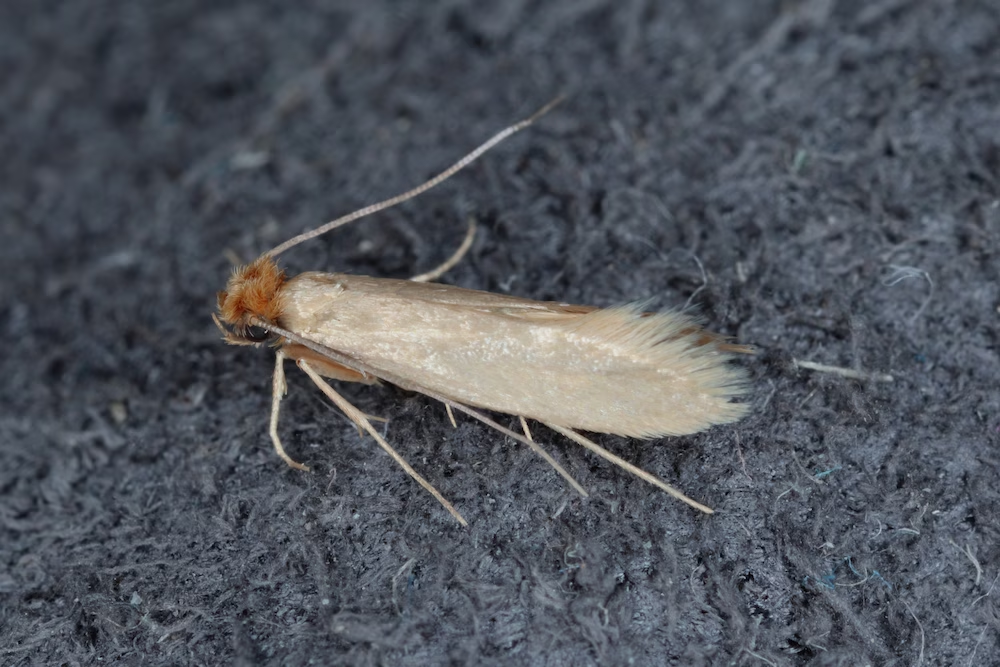
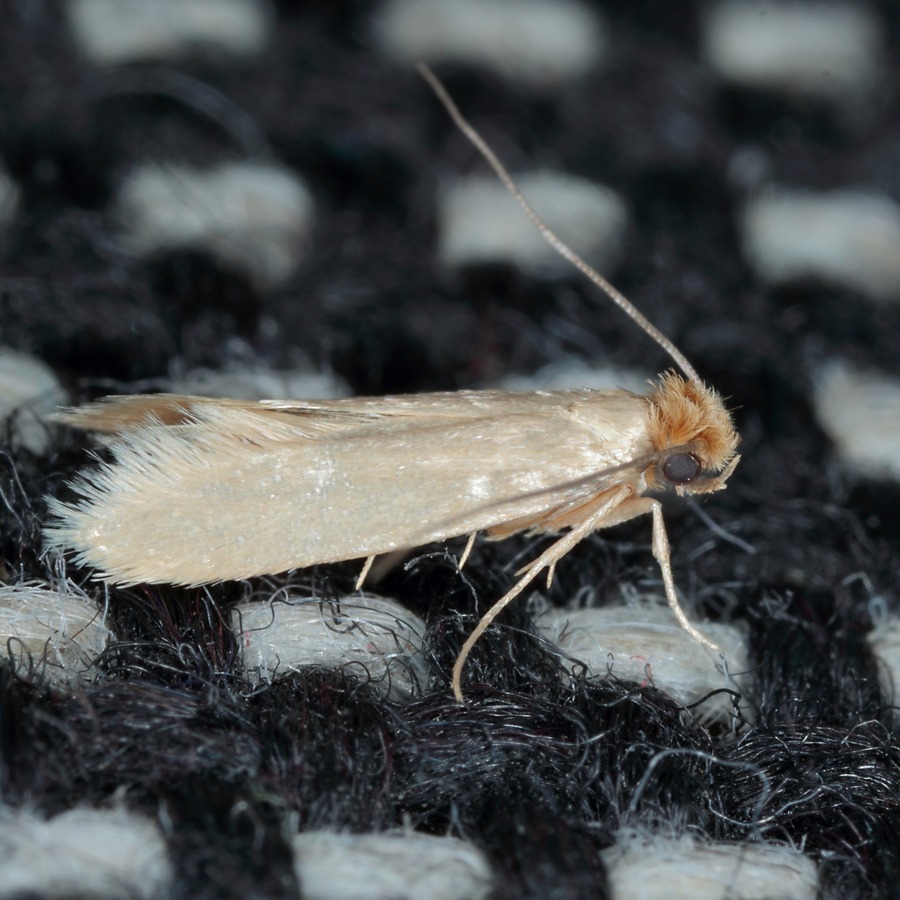
Common clothes moths are light brown to almost white in colour, and when their wings are folded, they are long and almost feathery in appearance. They have reddish, fluffy heads with two large, black eyes on either side and long, thin antennae.
Public Health Risk Level:
Low
Property Damage Risk Level:
Medium
Common Clothes Moth Facts
The latin name for the common clothes moth is Tineola bisselliella, and while they used to be one of the most common moth species found in the UK, they are now often less prevalent than case-bearing clothes moths (Tinea pellionella).
Also known as the webbing clothes moth, these insects have a 6–7 mm (0.24–0.28 in) body length and 9–16 mm (0.35–0.63 in) wingspan, with each narrow wing fringed with rows of small, golden hairs. Their heads have reddish hairs on them.
Common clothes moths hate light, and are rarely seen, but the adult moths can live for up to 30 days, and the full moth life cycle can take between 65 and 90 days. As with most pest moth species, it is the common clothes moth larvae that are most destructive, as they eat natural fibres such as wool, cotton, leather, velvet and silk to help them pupate and transform into adults.
How To Identify A Common Clothes Moth Infestation
As mentioned, adult common clothes moths hate light, meaning you may not see them often, but here are some signs to watch out for:
- Holes: Look for damage to woollen clothing, carpet edges and many other natural fibres throughout your property.
- Larvae: At the larval stage, common clothes moths look like small, yellowish-white maggots.
- Eggs: If you see clusters of off-white specks, which are less than 1mm in length and usually laid deep inside carpets, clothing or home furnishings, then these could be common clothes moth eggs.
- Adult Moths: To check the species of moths you’re dealing with, you can attract adult moths using a pheromone trap, as common clothes moths aren’t attracted to light and are harder to catch.
What To Do If You Find Common Clothes Moths
If you’ve found common clothes moths, case bearing clothes moths, brown house moths, Indian meal moths or are unsure of the species, then you need specialist pest control services to get rid of moths fast.
All moth species breed quickly, and females lay eggs over several days to propagate the species. If you have a common clothes moth infestation, then they can eat clothes and other fabrics across your home quickly, causing expensive and sometimes irreparable damage.
It’s important that you’re proactive, so even if you can’t identify the moth species you have, as soon as you see signs of moths and holes in clothes you need to contact us on 01388309345 to book expert moth control.

Frequently asked questions
A sudden clothes moth infestation usually occurs because the insects have been introduced into your home accidentally or have managed to fly inside undetected. The most common source is bringing second hand items into the property, such as vintage clothing, antique rugs, or upholstered furniture that already contains hidden moth eggs or larvae. Alternatively, adult moths can fly through open windows and doors during the warmer months, or they can migrate indoors from birds nests situated near your roof or chimney.
While clothes moths do not bite humans, spread diseases, or pose a direct health risk, they are a serious threat to your property. If left unchecked, the larvae can cause irreversible and expensive damage to natural fibres such as wool, silk, cashmere, feathers, and leather. Finding them early is essential to protecting your clothing, heirlooms, and carpets from significant financial loss.
Eliminating clothes moths requires a thorough and systematic approach because their eggs and larvae are highly resilient. You should start by intensively vacuuming all affected areas, including the dark corners of wardrobes, under furniture, and along carpet edges, ensuring you empty the vacuum canister outside immediately. Infested clothing should be washed at a high temperature above 60 degrees Celsius, or delicate items can be sealed in bags and placed in a freezer for at least two weeks to kill the life cycles. For persistent or widespread infestations, professional heat treatments or targeted insecticide applications are usually necessary to completely eradicate the problem.
Because clothes moth larvae actively avoid the light, you will rarely see the insects themselves, but you will notice the damage they leave behind. The first signs typically include irregular holes appearing in your natural fabrics, as well as small, silk like webs or cases attached to clothing fibres in dark cupboards. You might also notice tiny, sand like droppings that match the colour of the fabric being consumed, or you may spot the small, straw coloured adult moths scuttling or flying weakly in dark corners.