
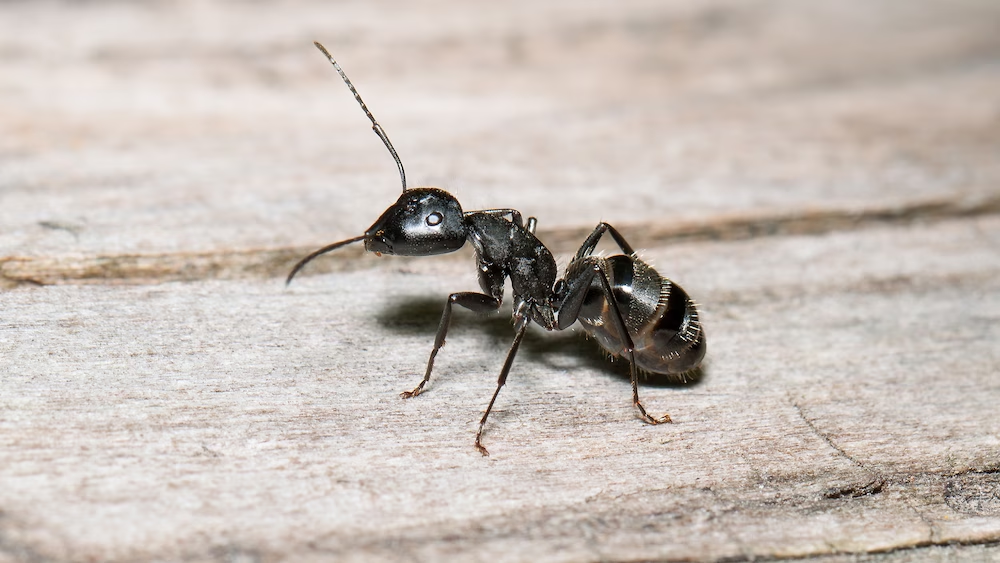
Black Ant
Scientific Name
Lasius niger
Season
March To October
Size
3.5-5 mm In Length
Characteristics
Black ants are small, black insects with distinctive segmented bodies and enlarged abdomens. In the summer, sexually mature queens and male worker ants sprout clear wings that are longer than their bodies and fly, and during this time, they are sometimes known as flying ants.
Public Health Risk Level:
Low
Property Damage Risk Level:
Low

Frequently asked questions
No, they pose a very low risk to both public health and property damage. Unlike some other pests, black garden ants do not bite, sting, or carry dangerous diseases. However, they are a major nuisance. Because they forage widely outside, they can track dirt and bacteria across your kitchen worktops, cupboards, and uncovered food items, making their presence highly unsanitary in homes and commercial kitchens.
Flying ants are simply sexually mature male and queen black ants. During the summer months, typically between July and August when the weather is warm and humid, these winged ants leave their underground nests en masse to mate in the air. This natural phenomenon is often referred to as “Flying Ant Day.” While it only lasts a short time, thousands of flying ants can suddenly emerge inside a property if a nest is located beneath the floors or foundations.
Ants enter properties in search of food and water, usually migrating indoors from nests located in nearby soil, under paving slabs, or inside cavity walls. They are heavily attracted to sugary and sweet substances, including spilled fruit juice, honey, crumbs, and pet food. Once a single foraging scout ant finds a food source, it leaves a chemical pheromone trail for the rest of the colony to follow, quickly leading to an influx of ants in your kitchen.
While over-the-counter ant powders and sprays might kill the worker ants you can see, they rarely solve the root problem. To eliminate an infestation permanently, the entire nest and the queen must be destroyed. Professional pest controllers like Invicta Environmental use advanced, highly palatable insecticidal baits that worker ants carry deep back into the nest themselves. Our BPCA-certified technicians will also identify and advise on sealing the entry points to prevent future invasions.