

Bluebottle Fly
Scientific Name
Calliphora vomitoria
Season
April To November
Size
10-14 mm In Length
Characteristics
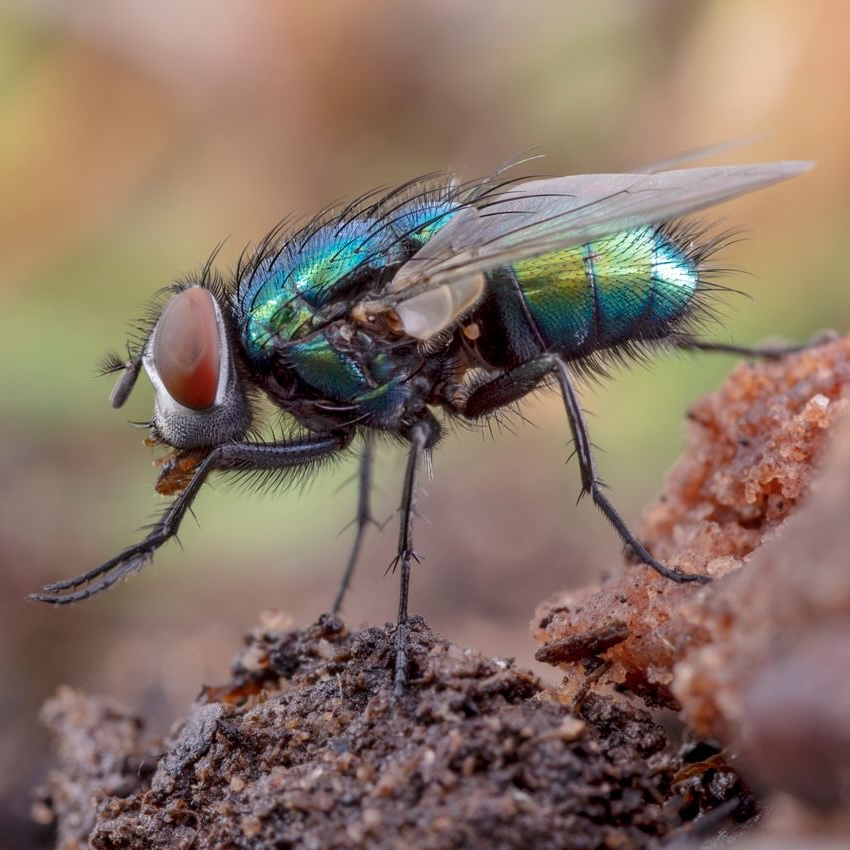
Bluebottle flies are a type of blowfly known for their distinctive metallic blue colouring. These flies are particularly attracted to decaying organic matter, such as rotting meat and faeces, which means they can cause contamination when they land or near food preparation surfaces or storage areas.
Public Health Risk Level:
Medium
Property Damage Risk Level:
Low

Frequently asked questions
While bluebottle flies can’t bite or sting, they spread a lot of germs and bacteria, including E. coli and Salmonella, which can cause significant health risks. For businesses, bluebottle flies can cause reputational damage and pose a public health risk if allowed close to food preparation areas.
Bluebottle flies are attracted to decaying organic matter, particularly rotting meat or faeces. As a result, they often congregate near unsecured bins. For homes, bluebottle flies may be present if you routinely don’t pick up animal mess in your garden, or if you have rotting fruit from trees that you don’t remove quickly. For businesses, bluebottle flies like rubbish bins and anywhere that stores or prepares food.
Adult bluebottle flies usually only live between 10 and 25 days, depending on the temperature and the presence of a reliable food supply. However, if bluebottle flies lay eggs inside decaying organic matter in your home, then the eggs could hatch in as little as a week, meaning you could soon face a significant fly infestation.
To get rid of bluebottle flies permanently, you need to make sure that you both kill the adult flies and remove their breeding source. This can be challenging, which is why Invicta offers expert support to get rid of bluebottles and other fly species. Once the flies are gone, we can provide pest proofing solutions to reduce your chances of a future fly problem.