

Common Wasp
Scientific Name
Vespula vulgaris
Season
April To September
Size
20-25 mm In Length
Characteristics
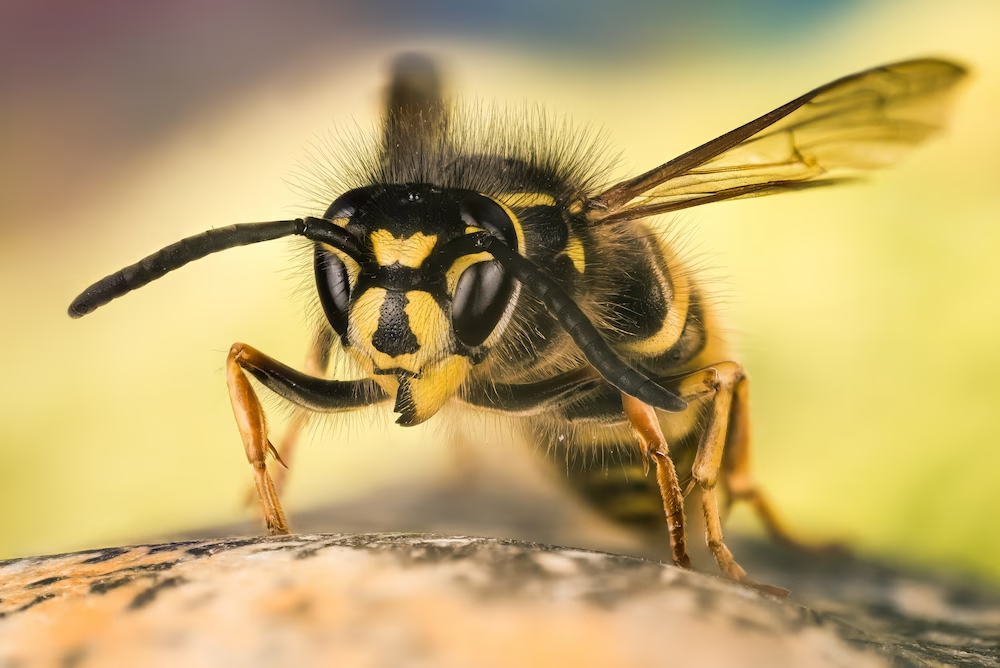
Common wasps, also known as yellowjackets, have thin black and yellow-striped bodies with what looks like a waist in the middle, between the thorax and abdomen, and small sections throughout their bodies. They have slim, translucent wings and are similar in appearance to honey bees.
Public Health Risk Level:
High
Property Damage Risk Level:
High

Frequently asked questions
Yes, they pose a high risk to public health. While they do not carry diseases in the same way rodents do, their stings are incredibly painful and can cause severe allergic reactions or life-threatening anaphylactic shock in sensitive individuals. Wasps are naturally aggressive when defending their nest and will sting repeatedly if they feel threatened. Their property damage risk is generally low, though they can sometimes chew through soft wood or plasterboard to expand their nesting space.
It is highly dangerous and strongly discouraged to try a DIY wasp nest removal. When a wasp nest is threatened, the colony releases an alarm pheromone that signals hundreds or thousands of wasps to attack simultaneously to defend their home. Over-the-counter sprays and foams often fail to reach deep into the core of the nest, which leaves you exposed to dozens of painful, synchronized stings.
During the spring and early summer, worker wasps are busy collecting protein for the colony’s larvae, which reward the workers with a sweet, sugary secretion. In late summer, the queen stops producing larvae, abruptly cutting off this food supply. The worker wasps then go into starvation mode and forage wildly for alternative sugar sources, which is why they swarm around sweet foods, pub gardens, bins, and sugary drinks, making them frantic and easily irritated.
Professional pest controllers like Invicta Environmental have the specialized protective equipment and access to industrial-strength treatments required to deal with nests safely. We apply a targeted insecticidal powder or liquid directly into the main entry point of the nest. This quickly eradicates the colony within a few hours. Because wasps never reuse an old nest, the structure can usually be left in place safely once it is completely inactive.