

European Hornet
Scientific Name
Vespa crabro
Season
April To November
Size
25-35 mm In Length
Characteristics
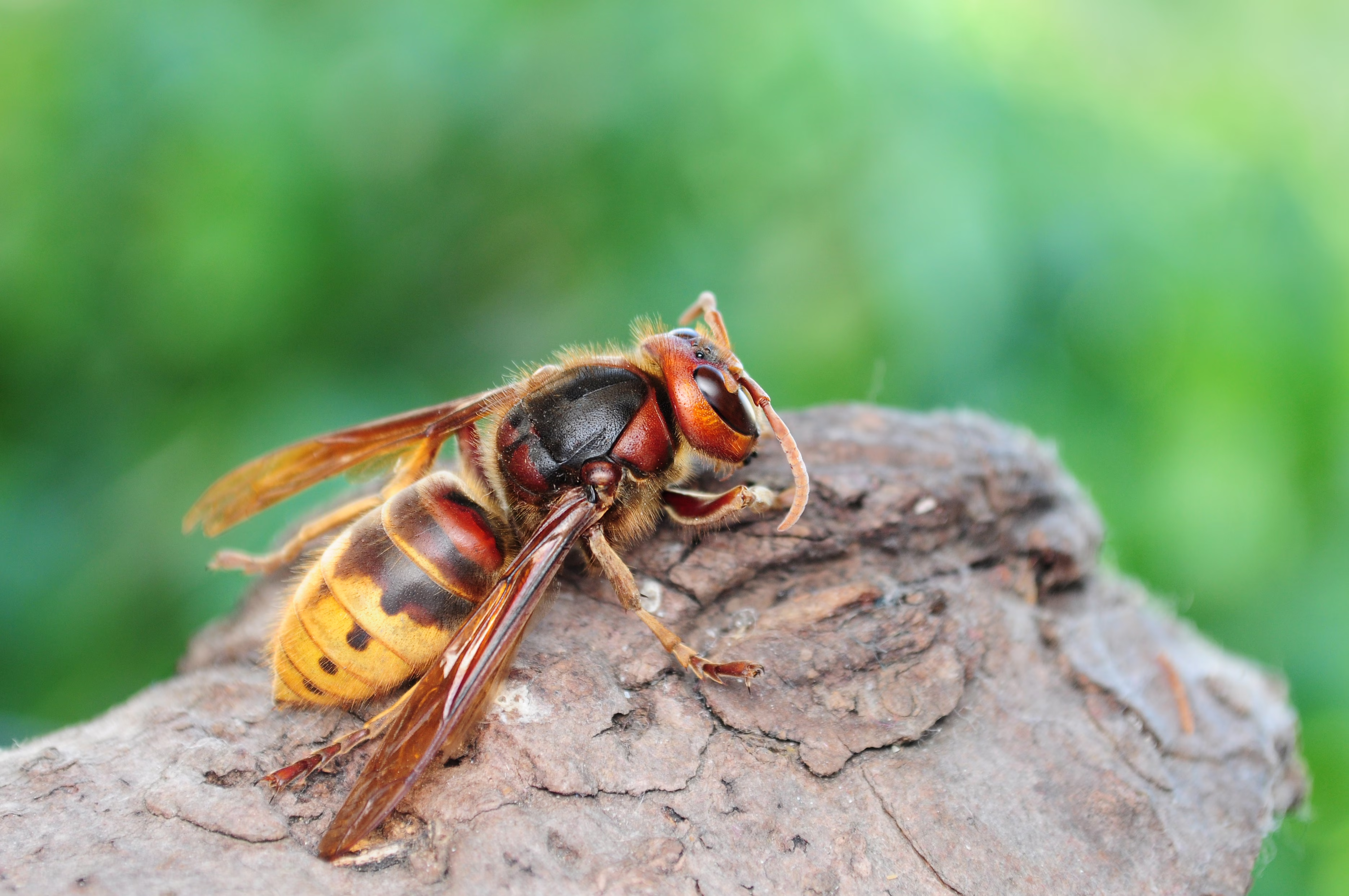
Larger than wasps, European Hornets have a similar appearance. Like wasps have slim yellow and black-striped bodies connected in the middle with a waist between the thorax and abdomen and segments throughout their bodies. What differentiates them is that hornets have reddish-brown heads and large yellowish wings.
Public Health Risk Level:
High
Property Damage Risk Level:
Medium
European Hornet Facts
The European hornet (Vespa crabro) is the largest species of social wasp found in the UK. As the name suggests, these impressive insects are native to Europe and are commonly found in wooded areas, though they are increasingly spotted in residential gardens and near human habitation where they seek out sheltered spots to build their nests.
The European hornet is often confused with the invasive Asian hornet, which is a non-native species that poses a threat to local honeybees. The main difference is that European hornets have a distinct yellow and black striped abdomen, much like a traditional wasp, and a reddish brown thorax and head. In contrast, Asian hornets are slightly smaller, predominantly dark brown or black, with a single yellow band on the abdomen and bright yellow leg tips.
European hornet colonies have a life cycle that lasts for just one season, with the entire nest dying off in the autumn except for the newly mated queens. These queens hibernate through the winter and emerge in the spring to establish a new colony, quickly laying eggs that hatch into workers. As such, hornet populations peaks during the late summer months, when a single mature nest can contain several hundred industrious hornets working to feed the colony.

Frequently asked questions
Despite their formidable size and loud buzz, European hornets are remarkably docile and are generally much less aggressive than standard wasps. They are largely indifferent to human presence and will usually fly away if approached whilst foraging for food. However, like any social insect, they will become highly protective and aggressive if they feel their nest is under direct threat or if they are trapped and crushed.
European hornets will not chase you under normal circumstances, as they prefer to avoid confrontation. If you walk past a foraging hornet, it will ignore you completely or fly in the opposite direction. The only time a European hornet might chase an individual is if the nest has been disturbed, in which case the guard hornets will defend their colony within a short radius of the nest site.
No, you do not need to report a European hornet sighting to government authorities. The European hornet is a native species that plays a vital role in the British ecosystem by controlling populations of garden pests like caterpillars and flies. Confusion often arises because the public is urged to report the invasive, non-native Yellow-legged Hornet, commonly known as the Asian hornet, which poses a severe threat to our honeybees.
If you spot a lone European hornet in your garden or home, the best approach is to stay calm and leave it alone. Opening a window will allow a stray hornet to navigate its way back outside, though you should be mindful that they are attracted to artificial light at night. If you discover a nest located in a high-traffic area of your property, such as near a doorway or loft hatch, you should contact a professional pest control service to manage it safely rather than attempting to tackle it yourself.