

Field Mouse
Scientific Name
Apodemus sylvaticus
Season
Spring, Summer And Autumn
Size
8- 10 cm In Length
Characteristics
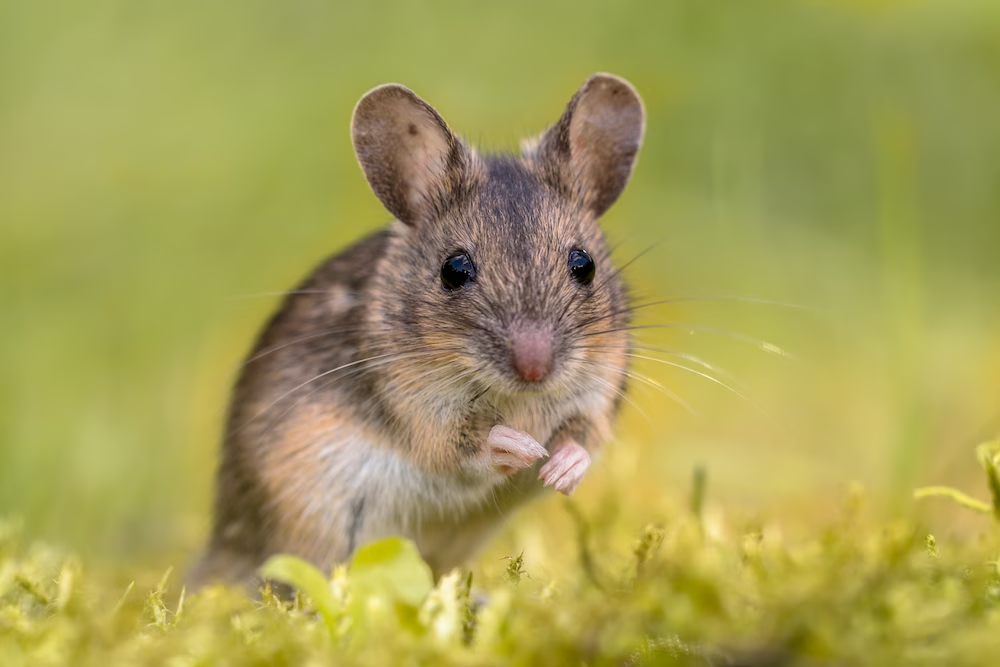
Also known as wood mice, field mice are slightly bigger than house mice and have brown fur with white underparts. They also have long, hairless tails, but their fur is much more brown and less grey than that of house mice.
Public Health Risk Level:
High
Property Damage Risk Level:
High

Frequently asked questions
Yes, they pose a high risk to both public health and your property. Field mice, often referred to as wood mice, carry dangerous pathogens and bacteria such as Salmonella and Hantavirus. They spread these diseases across surfaces through their urine, droppings, and saliva. Like all rodents, their teeth grow continuously, forcing them to chew constantly. This can result in significant property damage and fire risks if they gnaw through wooden beams, insulation, and live electrical wiring.
Field mice naturally prefer to live outdoors in gardens, fields, and hedgerows. However, during the autumn and winter months when the temperature drops and their natural food supplies dwindle, they instinctively seek out warmth, shelter, and easy food sources. Because they can squeeze through gaps as tiny as the width of a ballpoint pen, they can easily slip into lofts, garages, cavity walls, and kitchen cupboards.
While they look similar at a glance, you can easily tell them apart by their colouring and distinct features. Field mice have a warm, reddish-brown coat with a stark, clean white or pale grey belly. They also have exceptionally large, protruding eyes and very large ears. House mice, on the other hand, are a uniform grey or dark brown colour all over, including their bellies, and they have smaller eyes and a distinctly musty odour.
Relying on shop-bought traps or basic retail poisons often fails to clear the root cause of the issue, as mice breed incredibly fast and learn to avoid cheap traps. To eliminate an infestation completely, Invicta Environmental conducts a thorough property inspection to map out where the mice are feeding and nesting. We then use professional-grade treatments to eradicate the pests safely and apply robust proofing methods to seal up all external entry points.