

Black Rat
Scientific Name
Rattus rattus
Season
Spring, Summer And Autumn
Size
12-14 cm In Length And 150- 280g In Weight
Characteristics
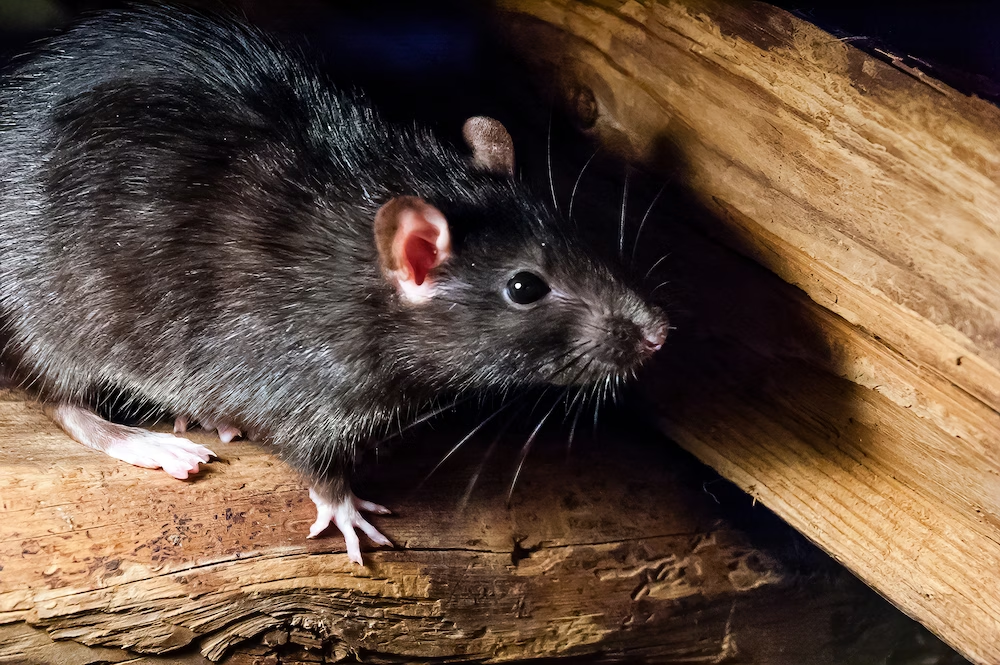
The smallest species of rat found in the UK, the black rat, has a dark black, furry body with a short, thick and hairless tail. They have small ears, a pointed nose and dark, round eyes.
Public Health Risk Level:
High
Property Damage Risk Level:
High

Frequently asked questions
Yes, black rats pose a high risk to both public health and your property. They carry severe diseases, including Leptospirosis (Weil’s disease), Salmonella, and Listeria, which they spread through their urine, droppings, and hair. In terms of property damage, they need to gnaw constantly to keep their teeth sharp. They can cause structural damage and serious fire hazards by chewing through wooden beams, plastic water pipes, and live electrical cables.
No, black rats are actually quite rare in the UK today. They have been largely displaced over the centuries by the larger and more aggressive brown rat. Today, black rat populations are usually restricted to port towns, coastal areas, and major shipping hubs because they are historically associated with maritime trade. If you see a rat in the North East, it is much more likely to be a brown rat, but black rats do still appear occasionally near ports.
The main differences are their size, features, and nesting habits. Black rats are smaller and more slender than brown rats, and their tails are actually longer than their head and body combined. They also have larger, thinner ears and a more pointed snout. Unlike brown rats, which prefer burrowing at ground level, black rats are agile climbers and often nest high up in roofs, attics, and rafters.
Eliminating black rats requires specialist intervention because they are highly intelligent, cautious of new objects, and excellent climbers. Traditional ground-level traps often fail because these rodents prefer to live and travel high up in roof spaces. Professional pest controllers like Invicta Environmental will track their elevated entry routes, use targeted treatments in nesting areas, and provide expert proofing to seal up high-level gaps permanently.